Bhai, OmniCard use karke dekho.
That's what my comment section kept telling me after a video breaking down FamPay's fee structure. So many people pushed it that I figured there had to be something good going on — I decided to test it properly, with the same scrutiny.
One month, one Max plan purchase, and a KYC that never fully completed. Here's exactly how it went.
It started with a different app. I'd just made a video breaking down FamPay's fee structure — pulling apart what you actually pay to use it — and my comment section blew up with one repeated suggestion.
The first few minutes felt promising. I opened the app, added ₹100 to my wallet, and it went through instantly. No friction, no KYC wall, nothing. I thought, okay, this is smooth.
Then I tried to actually pay someone.
The moment I hit pay, the app threw a wall in my face: "Complete your KYC." Fair enough — except completing KYC wasn't free. OmniCard slapped two paid plans in front of me: one around ₹250, and a bigger one around ₹499.
That's the part that bothered me from day one. The stuff that should just work — verifying who you are so you can send money — was locked behind a paywall.
"The thing that should be free, they're charging ₹250 to ₹500 for. Why?"
Still, I'd committed to testing it. I bought the Max plan so I could unlock the full feature set and use it for a month.
I'll give credit where it's due. Once I purchased the plan, a lot of features unlocked, and the app itself is genuinely clean. The interface is basic in the best way — nothing cluttered, easy to move around.
The best surprise was that I didn't have to deal with any bank paperwork. No branch visits, no documents. Just a simple, no-nonsense setup. At this point I was still cautiously optimistic and mostly wondering whether hidden charges would show up after the first month.
They didn't wait a month. The problems showed up almost immediately.
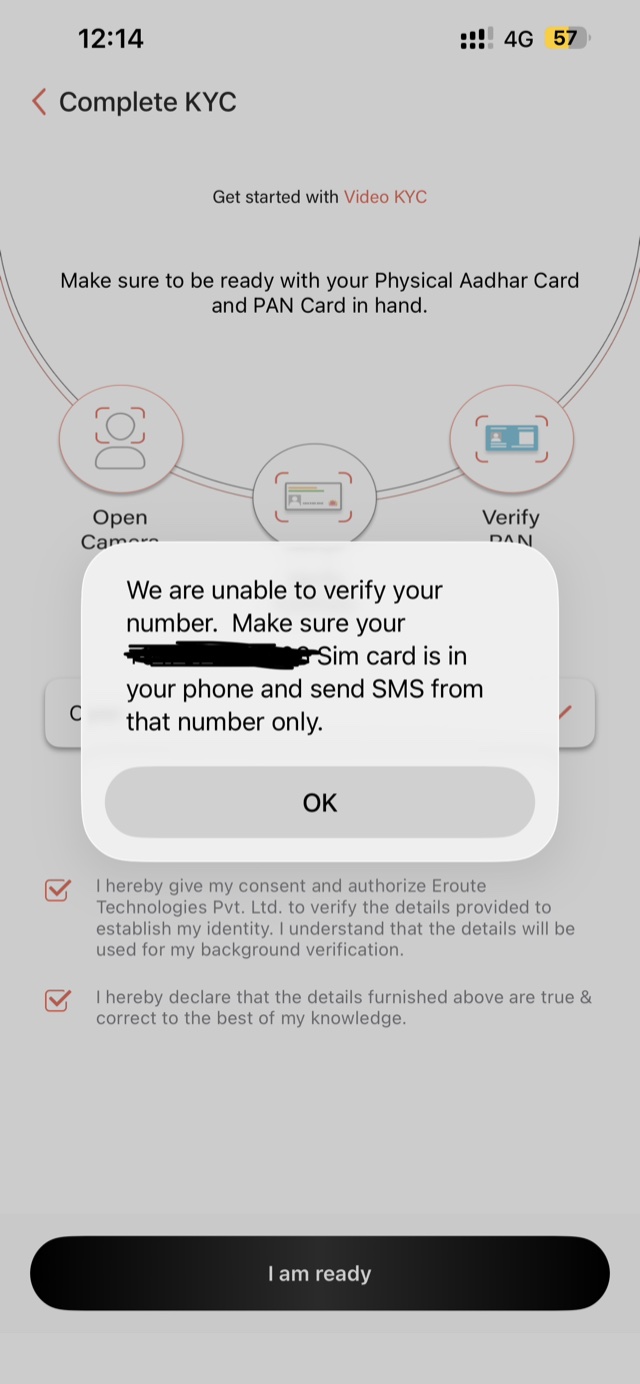
I sat down to complete my KYC — the whole reason I'd paid. I submitted my details, shared what it asked for, and got hit with this:
"We are unable to verify your SIM card."
My SIM was already in the phone. Everything was set up correctly. But the app kept rejecting it. I burned through all three attempts, and each retry just walked me closer to being locked out entirely. On iOS specifically, there's a bug where verifying your number throws back "We are unable to verify your number" no matter what you do.
I'd paid ₹250 for this. So I did what any customer would — I went to help and support.
This is the single worst thing about OmniCard, and it's why I'm done with it.
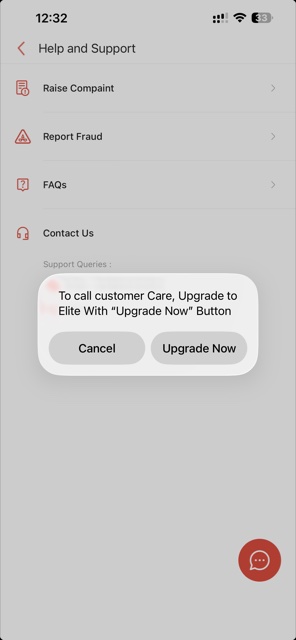
Their support isn't support — it's an upsell. I clicked the call button to talk to a human, and instead of connecting me, the app told me to upgrade to ₹499 to be able to talk. I'd already paid ₹250. Now I needed to pay ₹500 more just to reach a person about a problem their app created.
"Pay ₹500 or you don't get to talk to customer care. Otherwise there's no resolution for you."
And when you do land in the complaint flow, you're first talking to bots. My KYC issue wasn't even a category in their ticket system, so there was no clean way to raise it. After banging my head against those bots long enough, they did eventually open a path to chat with a real person — but that turned out to be its own kind of pain.
The human replies came in roughly once every half hour, and to my surprise the agents were genuinely bad at their job. The only "resolution" they offered me for a failing KYC was this:
"Recharge your SIM card with ₹10 of talk time."
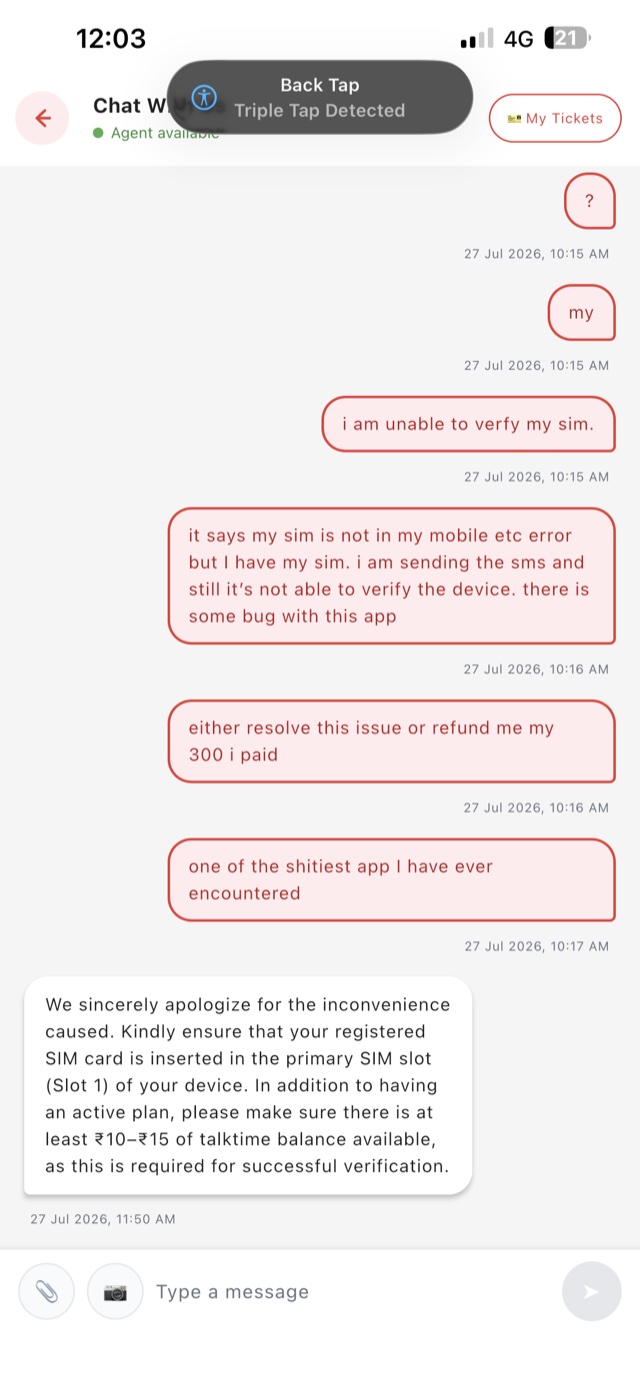
What the actual hell. But I needed to give an honest review, so I gave in and did it. It didn't help — obviously. And then they closed the chat before even asking whether it worked. When I went back and ground through the bots all over again to reopen it, they simply stopped replying to me entirely.
"They closed the chat before even asking if it worked."
I even tagged them on Instagram. No reply. Their marketing team might be the worst part of the whole operation.

After about 10 days I gave it one more shot, hoping the SIM verification would finally go through. To my surprise — it did. They'd clearly pushed some update in the background; maybe they'd found the bug.
But the relief lasted about ten seconds. Once the SIM verified, the app dropped me onto a DigiLocker page asking me to share my Aadhaar. I tried. I kept tapping to authorize it — and every single time, their broken little tick/loading animation froze and stopped me from going through. The KYC just would not complete.
That was the moment I was truly done.
I'm still genuinely curious whether I made a mistake somewhere — maybe there's a setup step I missed. If you've used OmniCard and had a different experience, I want to hear it.
And if you know a fintech app that actually respects your time and money, drop it in the comments — I'd rather spend my testing on something worth it.
This blog is built from four shorts documenting the experience end to end.