The "Just 9% Interest" Trap: The Hidden Math of Flat vs Reducing Loans
"सिर्फ 9% ब्याज" का जाल: फ्लैट बनाम रिड्यूसिंग लोन का छिपा हुआ गणित
We have all seen those flashy loan advertisements from banks and NBFCs promising instant personal loans at
"Just 9% Interest!"
हम सबने बैंकों और NBFCs के वो लुभावने लोन विज्ञापन देखे हैं जो वादा करते हैं
"सिर्फ 9% ब्याज पर तुरंत पर्सनल लोन!"
It sounds incredibly cheap, right? But what if I told you that a 9% loan could actually be costing you closer to 16% in reality?
यह सुनने में बहुत सस्ता लगता है, है ना? लेकिन क्या होगा अगर मैं आपसे कहूँ कि एक 9% का लोन असल में आपको 16% के करीब पड़ रहा है?
Welcome to the biggest psychological trap in the lending industry. Today, we are going to decode the hidden math behind how banks calculate your EMI and why you should never just look at the advertised percentage. It all comes down to one massive difference: Flat Interest Rate vs. Reducing Balance Interest Rate.
लेंडिंग इंडस्ट्री के इस सबसे बड़े जाल में आपका स्वागत है। आज, हम उस छिपे हुए गणित को डिकोड करने जा रहे हैं कि बैंक आपकी EMI कैसे कैलकुलेट करते हैं और आपको कभी भी सिर्फ विज्ञापित प्रतिशत को क्यों नहीं देखना चाहिए। यह सब एक बड़े अंतर पर आकर रुकता है: फ्लैट ब्याज दर बनाम रिड्यूसिंग बैलेंस ब्याज दर।
The Illusionधोखा
The Flat Interest Rate
फ्लैट ब्याज दर
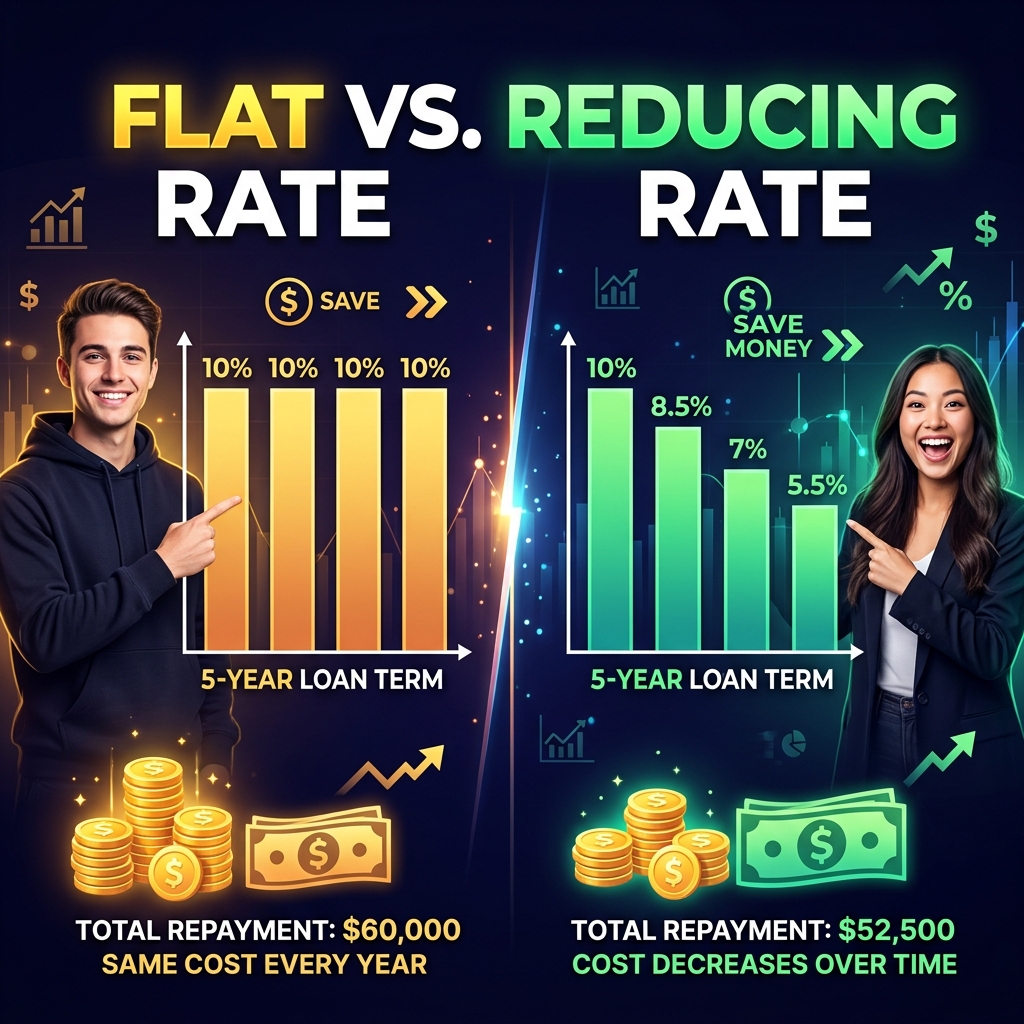
When a bank offers you a flat interest rate, the calculation is brutally simple—and incredibly expensive. Under the flat rate method, the bank calculates your total interest based on the original principal amount for the entire loan tenure.
जब कोई बैंक आपको फ्लैट ब्याज दर ऑफर करता है, तो कैलकुलेशन बहुत ही सिंपल होती है—और बहुत ही महंगी भी। फ्लैट रेट मेथड के तहत, बैंक आपके कुल ब्याज की गणना पूरे लोन अवधि के लिए आपके मूल (original) मूलधन पर करता है।
Example: ₹5 Lakhs for 5 Years @ 10% Flat
-
10% of ₹5 Lakhs is ₹50,000.
₹5 लाख का 10% होता है ₹50,000।
-
Over 5 years, you will pay ₹50,000 x 5 = ₹2,50,000 in pure interest.
5 सालों में, आप ₹50,000 x 5 = ₹2,50,000 सिर्फ ब्याज में देंगे।
The Trapअसली जाल
Even though you are paying back a portion of that ₹5 Lakhs every month through your EMI, the bank continues to charge you interest as if you still hold the full ₹5 Lakhs in year 2, year 3, and year 5. You are paying interest on money you have already returned!
भले ही आप हर महीने अपनी EMI के जरिए उस ₹5 लाख का कुछ हिस्सा वापस कर रहे हैं, बैंक आपसे लगातार ऐसे ब्याज वसूलता है जैसे कि साल 2, साल 3, और साल 5 में भी आपके पास पूरा ₹5 लाख हो। आप उस पैसे पर ब्याज दे रहे हैं जो आप पहले ही लौटा चुके हैं!
Flat vs Reducing Rate Loan Calculator
फ्लैट बनाम रिड्यूसिंग लोन ब्याज कैलकुलेटर
With a Flat Rate, you pay an extra ₹0 in interest!
The Reality: The Reducing Balance Interest Rate
सच्चाई: रिड्यूसिंग बैलेंस ब्याज दर
Now, let's look at how honest lending works.
अब, आइए देखते हैं कि ईमानदारी से लोन देना कैसे काम करता है।
Under the reducing balance method (or diminishing balance), the interest is calculated only on the outstanding loan amount.
रिड्यूसिंग बैलेंस मेथड (या diminishing balance) के तहत, ब्याज की गणना केवल बचे हुए लोन अमाउंट पर की जाती है।
If you take that same ₹5,00,000 loan, after your first month's EMI, your principal amount drops. In the second month, the bank calculates interest only on the remaining ₹4,90,000 (roughly). As your principal drops every month, the interest portion of your EMI drops with it.
अगर आप वही ₹5,00,000 का लोन लेते हैं, तो आपकी पहली महीने की EMI के बाद, आपका मूलधन कम हो जाता है। दूसरे महीने में, बैंक सिर्फ बचे हुए ₹4,90,000 (लगभग) पर ब्याज की गणना करता है। जैसे-जैसे आपका मूलधन हर महीने कम होता है, आपकी EMI में ब्याज का हिस्सा भी कम होता जाता है।
The Side-by-Side Reality Check
आमने-सामने की सच्चाई
Let's look at the exact same loan side-by-side.
Loan Details: ₹5,00,000 | 5-Year Tenure | 10% Interest Rate
आइए एक ही लोन को आमने-सामने रखकर देखते हैं।
लोन की डिटेल्स: ₹5,00,000 | 5-साल की अवधि | 10% ब्याज दर
| Metricपैमाना |
10% Flat Rate |
10% Reducing Rate |
| Monthly EMIमासिक EMI |
₹12,500 |
₹10,624 |
| Total Interest Paidकुल ब्याज भुगतान |
₹2,50,000 |
₹1,37,440 |
| Total Amount Repaidकुल चुकाई गई राशि |
₹7,50,000 |
₹6,37,440 |
The Result: By falling for a 10% flat rate, you end up paying ₹1,12,560 extra straight into the bank's pocket.
नतीजा: 10% फ्लैट रेट के चक्कर में पड़कर, आप अंत में सीधे बैंक की जेब में ₹1,12,560 एक्स्ट्रा डाल देते हैं।
To make the math simple: A 10% Flat Rate is mathematically equivalent to an 18% Reducing Rate. That 9% or 10% marketing hook is nothing but an illusion designed to lock in your capital.
गणित को आसान बनाने के लिए: एक 10% फ्लैट दर गणितीय रूप से 18% रिड्यूसिंग दर के बराबर है। वह 9% या 10% का मार्केटिंग जाल आपके पैसे को फंसाने के लिए बनाए गए एक धोखे के अलावा और कुछ नहीं है।
The Golden Rule for Borrowers
कर्ज लेने वालों के लिए सुनहरा नियम
Whenever an agent calls you offering a personal loan, vehicle loan, or consumer durable loan, your first question should never be "What is the interest rate?"
जब भी कोई एजेंट आपको पर्सनल लोन, व्हीकल लोन या कंज्यूमर ड्यूरेबल लोन की पेशकश के लिए कॉल करे, तो आपका पहला सवाल कभी भी "ब्याज दर क्या है?" नहीं होना चाहिए।
Your first question must strictly be: "Is this a flat rate or a reducing rate?"
आपका पहला सवाल हमेशा यह होना चाहिए: "क्या यह फ्लैट रेट है या रिड्यूसिंग रेट?"
If they say it's a flat rate, walk away. Always demand the Effective Annual Percentage Rate (APR) or ask them to run the numbers through a flat vs reducing interest rate calculator.
अगर वे कहते हैं कि यह फ्लैट रेट है, तो वहां से हट जाएं। हमेशा Effective Annual Percentage Rate (APR) की मांग करें या उनसे कहें कि वे नंबरों को हमारे फ्लैट बनाम रिड्यूसिंग ब्याज दर कैलकुलेटर में चला कर दिखाएं।
Don't trust the bank's verbal promises. Use the interactive calculator above to plug in any loan offer you receive and see the actual hidden cost before you sign the agreement.
बैंक के जुबानी वादों पर भरोसा मत कीजिए। आपको मिलने वाले किसी भी लोन ऑफर को चेक करने के लिए ऊपर दिए गए हमारे इंटरएक्टिव कैलकुलेटर का इस्तेमाल करें और एग्रीमेंट साइन करने से पहले असल छिपी हुई लागत को देखें।
Frequently Asked Questions
अक्सर पूछे जाने वाले प्रश्न
1. What exactly is a flat interest rate?
1. फ्लैट ब्याज दर (flat interest rate) आखिर क्या है?
▼
A flat interest rate means the interest is calculated on the full, original loan amount for the entire duration of the loan. Even though you are paying back the principal every month through your EMI, the bank continues to charge you interest as if you haven't repaid anything.
फ्लैट ब्याज दर का मतलब है कि ब्याज की गणना लोन की पूरी अवधि के लिए पूरे, मूल (original) लोन अमाउंट पर की जाती है। भले ही आप हर महीने अपनी EMI के जरिए मूलधन वापस कर रहे हों, बैंक आपसे ऐसे ही ब्याज वसूलता रहता है जैसे आपने कुछ भी वापस न किया हो।
2. What is a reducing balance interest rate?
2. रिड्यूसिंग बैलेंस ब्याज दर (reducing balance interest rate) क्या है?
▼
A reducing balance (or diminishing) interest rate calculates interest only on the outstanding loan amount. As you pay your EMI each month, your principal balance decreases, which means the interest charged in the following months also decreases.
रिड्यूसिंग बैलेंस (या डिमिनिशिंग) ब्याज दर केवल बचे हुए लोन अमाउंट पर ब्याज की गणना करती है। जैसे-जैसे आप हर महीने अपनी EMI का भुगतान करते हैं, आपका मूलधन कम होता जाता है, जिसका मतलब है कि आने वाले महीनों में लगने वाला ब्याज भी कम हो जाता है।
3. Is a flat interest rate cheaper than a reducing rate?
3. क्या फ्लैट ब्याज दर रिड्यूसिंग दर से सस्ती होती है?
▼
No. A flat interest rate always looks mathematically smaller on paper, but it is much more expensive in reality. A 10% flat rate usually costs you the same amount of money as an 18% to 20% reducing rate over the same tenure.
बिल्कुल नहीं। फ्लैट ब्याज दर हमेशा कागजों पर छोटी दिखती है, लेकिन हकीकत में यह बहुत ज्यादा महंगी होती है। आमतौर पर एक 10% का फ्लैट रेट आपको उतना ही पैसा खर्च कराता है जितना कि उसी अवधि के लिए 18% से 20% का रिड्यूसिंग रेट।
4. How can a 10% flat rate be more expensive than a 15% reducing rate?
4. 10% का फ्लैट रेट 15% के रिड्यूसिंग रेट से ज्यादा महंगा कैसे हो सकता है?
▼
Because a flat rate charges interest on money you have already paid back. Over a 3 to 5-year tenure, a 15% reducing rate will cost you significantly less in total interest than a 10% flat rate, because the 15% is only being applied to a constantly shrinking principal amount.
क्योंकि एक फ्लैट रेट उस पैसे पर भी ब्याज लगाता है जिसे आप पहले ही वापस कर चुके हैं। 3 से 5 साल की अवधि में, 15% रिड्यूसिंग रेट आपको कुल ब्याज में 10% फ्लैट रेट की तुलना में काफी सस्ता पड़ेगा, क्योंकि 15% केवल लगातार कम हो रहे मूलधन पर ही लगाया जाता है।
5. Why do banks and lenders still offer flat interest rates?
5. बैंक और लेंडर्स अभी भी फ्लैट ब्याज दरें क्यों ऑफर करते हैं?
▼
Lenders offer flat rates for two reasons: First, it acts as a psychological marketing hook because the percentage looks very low (e.g., "Just 9%"). Second, it is much easier to calculate and process for small-ticket, high-volume loans.
लेंडर्स दो कारणों से फ्लैट रेट ऑफर करते हैं: पहला, यह एक मनोवैज्ञानिक मार्केटिंग जाल की तरह काम करता है क्योंकि प्रतिशत बहुत कम दिखता है (जैसे, "सिर्फ 9%")। दूसरा, छोटे अमाउंट वाले, ज्यादा संख्या वाले लोन्स के लिए इसे कैलकुलेट और प्रोसेस करना बहुत आसान होता है।
6. Does my EMI change every month in a reducing rate loan?
6. क्या रिड्यूसिंग रेट लोन में मेरी EMI हर महीने बदलती है?
▼
No, your monthly EMI amount usually remains fixed in both types of loans. However, in a reducing rate loan, the internal proportion changes: in the early months, a larger portion of your EMI goes toward interest, but towards the end of your loan, most of your EMI goes toward paying off the principal.
नहीं, आपके मासिक EMI का अमाउंट आमतौर पर दोनों तरह के लोन्स में फिक्स रहता है। हालांकि, रिड्यूसिंग रेट लोन में, अंदरूनी अनुपात (proportion) बदलता रहता है: शुरुआती महीनों में, आपकी EMI का बड़ा हिस्सा ब्याज में जाता है, लेकिन लोन के अंत की तरफ, आपकी EMI का ज्यादातर हिस्सा मूलधन चुकाने में जाता है।
7. How can I estimate the real cost of a flat interest rate?
7. मैं फ्लैट ब्याज दर की असल लागत का अंदाजा कैसे लगा सकता हूँ?
▼
As a quick rule of thumb, you can multiply a quoted flat rate by approximately 1.85 to find its equivalent reducing rate (effective annual cost). For example, a 10% flat rate is roughly equivalent to an 18.5% reducing rate. However, using our flat vs reducing EMI calculator above is the most accurate way to check.
एक आसान से नियम के तौर पर, आप किसी भी फ्लैट रेट को लगभग 1.85 से गुणा (multiply) करके उसका बराबर रिड्यूसिंग रेट निकाल सकते हैं। उदाहरण के लिए, 10% फ्लैट रेट लगभग 18.5% रिड्यूसिंग रेट के बराबर है। हालांकि, ऊपर दिए गए हमारे फ्लैट बनाम रिड्यूसिंग EMI कैलकुलेटर का उपयोग करना इसे चेक करने का सबसे सटीक तरीका है।
8. Which types of loans usually have flat interest rates?
8. आमतौर पर किन लोन्स में फ्लैट ब्याज दरें होती हैं?
▼
Flat interest rates are most commonly found in short-term, small-ticket loans like Two-Wheeler Loans, Consumer Durable Loans (buying a TV or fridge on EMI), and some microfinance or instant app-based personal loans.
फ्लैट ब्याज दरें आमतौर पर छोटे समय के, छोटे अमाउंट वाले लोन्स जैसे कि टू-व्हीलर लोन, कंज्यूमर ड्यूरेबल लोन (EMI पर टीवी या फ्रिज खरीदना), और कुछ माइक्रोफाइनेंस या इंस्टेंट ऐप-आधारित पर्सनल लोन्स में पाई जाती हैं।
9. How does prepaying the loan affect flat vs. reducing interest loans?
9. लोन को प्रीपे (पहले चुकाने) का फ्लैट बनाम रिड्यूसिंग ब्याज लोन्स पर क्या असर होता है?
▼
In a reducing rate loan, if you make a lump-sum prepayment, your outstanding principal drops immediately, which drastically reduces your future interest burden. In a flat rate loan, prepaying often doesn't give you the same benefit, and you may still be locked into paying the pre-calculated interest (plus heavy foreclosure charges).
रिड्यूसिंग रेट लोन में, अगर आप एक साथ बड़ा प्रीपेमेंट करते हैं, तो आपका बचा हुआ मूलधन तुरंत कम हो जाता है, जिससे आपके भविष्य का ब्याज का बोझ काफी कम हो जाता है। फ्लैट रेट लोन में, प्रीपेमेंट करने पर अक्सर आपको वैसा फायदा नहीं मिलता, और आप अभी भी पहले से कैलकुलेट किए गए ब्याज (और भारी फोरक्लोज़र चार्जेस) को चुकाने में फंसे रह सकते हैं।
10. How can I protect myself from the flat-rate trap when taking a loan?
10. लोन लेते समय मैं खुद को फ्लैट-रेट के जाल से कैसे बचा सकता हूँ?
▼
Never accept a loan based on the advertised interest rate alone. Always ask the lender for the Effective Annual Percentage Rate (APR) and demand the full amortization schedule (the month-by-month breakdown of your EMI into principal and interest) before you sign any agreement. Verify the numbers in our loan comparison calculator.
कभी भी सिर्फ विज्ञापित (advertised) ब्याज दर के आधार पर लोन स्वीकार न करें। एग्रीमेंट साइन करने से पहले हमेशा लेंडर से Effective Annual Percentage Rate (APR) पूछें और पूरे अमॉर्टाइजेशन शेड्यूल की मांग करें। हमारे लोन तुलना कैलकुलेटर में नंबरों को जरूर वेरिफाई करें।