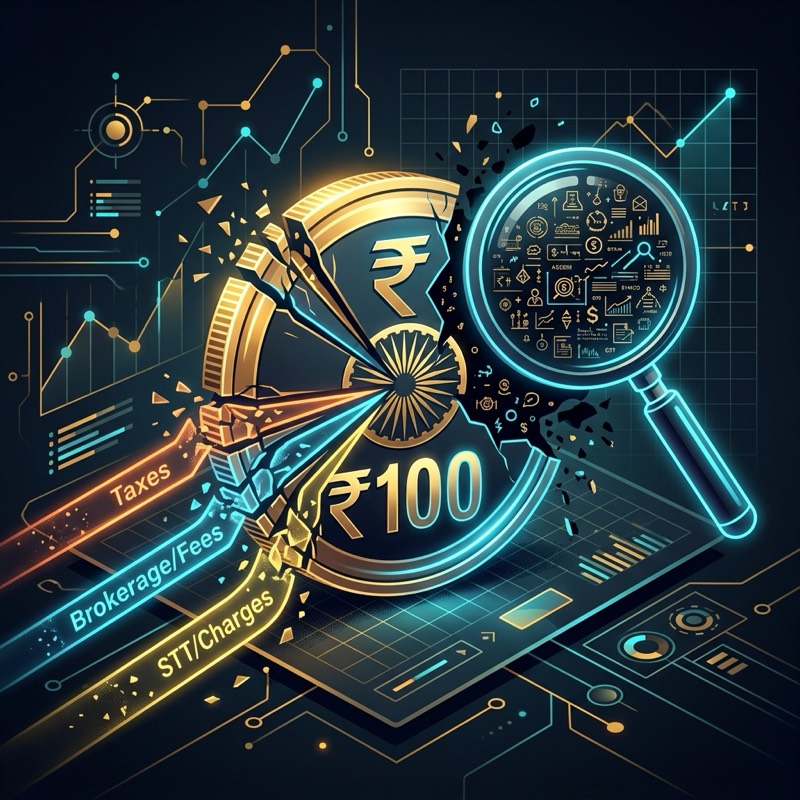
₹100 Profit but Only ₹35 in Your Pocket? The Hidden Charges of the Indian Stock Market₹100 का मुनाफा लेकिन जेब में सिर्फ ₹35? भारतीय शेयर बाजार के छिपे हुए चार्ज
Why your ₹100 stock market profit turns into just ₹35. We break down the hidden delivery trading charges like DP charges, STT, brokerage, and taxes.
Everyone enters the stock market in India to make money. We see our portfolio turn green, get excited, and immediately book our profits. But did you know that if you sell your shares the wrong way, your hard-earned profit doesn’t go into your pocket—it goes straight to your broker and the government?हर कोई पैसा कमाने के लिए भारतीय शेयर बाजार में प्रवेश करता है। हम अपना पोर्टफोलियो हरा देखते हैं, उत्साहित होते हैं, और तुरंत मुनाफा बुक करते हैं। लेकिन क्या आप जानते हैं कि यदि आप गलत तरीके से शेयर बेचते हैं, तो आपकी मेहनत की कमाई आपकी जेब में नहीं जाती—यह सीधे आपके ब्रोकर और सरकार के पास जाती है?
They charge you explicitly, but they don’t always show it clearly on the dashboard. Let’s decode the hidden math behind share market delivery trading charges.वे आपसे स्पष्ट रूप से चार्ज लेते हैं, लेकिन वे हमेशा इसे डैशबोर्ड पर स्पष्ट रूप से नहीं दिखाते हैं। आइए शेयर बाजार डिलीवरी ट्रेडिंग शुल्क के पीछे के छिपे गणित को डिकोड करें।
The ₹100 Profit Illusion₹100 के मुनाफे का भ्रम
"Let’s say you invest ₹10,000 in a stock for delivery. A few days later, you see a ₹100 profit on your screen, and you decide to exit. You probably expect that ₹100 to land in your bank account, right? Wrong! In reality, you will be left with barely ₹30 to ₹35.""मान लीजिए आप डिलीवरी के लिए किसी शेयर में ₹10,000 निवेश करते हैं। कुछ दिनों बाद, आपको स्क्रीन पर ₹100 का मुनाफा दिखता है, और आप बाहर निकलने का फैसला करते हैं। आप शायद उम्मीद करते हैं कि वह ₹100 आपके बैंक खाते में आ जाएंगे, सही? गलत! असल में आपके पास मुश्किल से ₹30 से ₹35 बचेंगे।"
Let’s look at where the remaining ₹65 disappears:आइए देखें कि शेष ₹65 कहाँ गायब हो जाते हैं:
Charge Typeचार्ज का प्रकार
Estimated Costअनुमानित लागत
Detailsविवरण
Brokerage (Zerodha & Angel One)
₹0
These brokers charge ₹0 for equity delivery trades.
Brokerage (Groww)
Minimum ₹5
groww brokerage is the lower of 0.1% or ₹20 per trade, but they enforce a strict minimum floor of ₹5 per executed order.
STT (Securities Transaction Tax)
~ ₹20
Levied by the government on both buying and selling.
Exchange & SEBI Charges
₹1 to ₹1.5
Mandatory regulatory fees.
Stamp Duty
₹1.5
Charged only during buying.
DP Charges (The Biggest Culprit)
~ ₹18 to ₹20
Depository Participant charges are applied by CDSL/NSDL every time you sell a stock from your demat account.
Total Fixed Charges: Roughly ₹50 to ₹51. Keep in mind, these hidden charges in the share market will be deducted regardless of whether you booked a profit or a loss.कुल फिक्स्ड चार्ज: लगभग ₹50 से ₹51। ध्यान रखें, ये शेयर बाजार के छिपे हुए चार्ज काटे जाएंगे, चाहे आपने लाभ बुक किया हो या हानि।
pie title The ₹100 Profit Breakdown
    "In Your Pocket" : 35
    "DP Charges (CDSL/NSDL)" : 20
    "STCG Tax (Government)" : 20
    "STT (Securities Transaction Tax)" : 15
    "Brokerage & Exchange" : 10
The STCG Tax HitSTCG टैक्स की मार
So, ₹50 is already gone to fixed demat account brokerage charges and fees. But here is the real catch: under Section 48 of the Income Tax Act, Securities Transaction Tax (STT) is strictly non-deductible when calculating your capital gains. This means the 20% Short-Term Capital Gains (STCG) tax is applied to your profit before STT is factored in, artificially inflating your taxable base.तो, ₹50 पहले ही फिक्स्ड डीमैट अकाउंट ब्रोकरेज और फीस में जा चुके हैं। लेकिन असली पेंच यहाँ है: आयकर अधिनियम की धारा 48 के तहत, आपके पूंजीगत लाभ की गणना करते समय प्रतिभूति लेनदेन कर (STT) सख्ती से गैर-कटौती योग्य है। इसका मतलब है कि 20% शॉर्ट-टर्म कैपिटल गेन्स (STCG) टैक्स आपके मुनाफे पर STT के शामिल होने से पहले लागू होता है, जिससे आपका कर योग्य आधार कृत्रिम रूप से बढ़ जाता है।
The Final Result: After the higher tax hit (calculated on that inflated base) and the separate STT loss, an investor is left holding roughly ₹30 to ₹35 out of a ₹100 micro-profit.अंतिम परिणाम: उच्च कर मार (उस बढ़े हुए आधार पर गणना) और अलग STT नुकसान के बाद, एक निवेशक ₹100 के माइक्रो-प्रॉफिट में से केवल ₹30 से ₹35 ही अपने पास रख पाता है।
How Indian Investors Can Minimize This "Hidden Math"भारतीय निवेशक इस "छिपे हुए गणित" को कैसे कम कर सकते हैं
While you cannot escape taxes and mandatory SEBI charges completely, you can use smart trading strategies to minimize their impact on your net profit.हालाँकि आप करों और अनिवार्य SEBI शुल्कों से पूरी तरह बच नहीं सकते हैं, लेकिन आप अपने शुद्ध लाभ पर उनके प्रभाव को कम करने के लिए स्मार्ट ट्रेडिंग रणनीतियों का उपयोग कर सकते हैं।
1
Never Sell in Chunksटुकड़ों में कभी शेयर न बेचें
DP charges are levied per scrip, per day. If you sell shares of one company in three batches on different days, you pay the ₹15+GST DP charge three times. Sell it all on the same day to pay only once.शेयरों पर DP शुल्क प्रति कंपनी, प्रति दिन लगाया जाता है। यदि आप एक कंपनी के शेयर तीन अलग-अलग दिनों में बेचते हैं, तो आप ₹15+GST DP शुल्क तीन बार चुकाएंगे। एक बार भुगतान करने के लिए उसी दिन सब कुछ बेच दें।
2
Stop Chasing Micro-Profitsमाइक्रो-प्रॉफिट के पीछे भागना बंद करें
Booking a ₹50 or ₹100 profit hurts you more than it helps. Always aim for a minimum profit target of at least ₹500. Even after ₹80 is wiped out by fees and taxes, you still keep a solid ₹400+ net profit.₹50 या ₹100 का मुनाफा बुक करना मदद से ज्यादा आपको नुकसान पहुंचाता है। कम से कम ₹500 का न्यूनतम लाभ लक्ष्य रखें। शुल्क और करों के बाद भी, आप ₹400+ का शुद्ध लाभ रखते हैं।
Frequently Asked Questions (FAQs)अक्सर पूछे जाने वाले प्रश्न (FAQs)
What are the DP charges in Groww?Groww में DP शुल्क क्या हैं?
The dp charges in groww are ₹20 + 18% GST (totaling ₹23.60) per company, per day, whenever you sell shares from your demat account. In comparison, Zerodha's DP charge is slightly lower at ₹13.50 + 18% GST (totaling ₹15.93).ग्रो में डीपी शुल्क ₹20 + 18% GST (कुल ₹23.60) प्रति कंपनी, प्रति दिन है, जब भी आप अपने डीमैट खाते से शेयर बेचते हैं। तुलना में, ज़ेरोधा का डीपी शुल्क ₹13.50 + 18% GST (कुल ₹15.93) पर थोड़ा कम है।
How can I calculate my exact profit after all charges?मैं सभी शुल्कों के बाद अपने सटीक लाभ की गणना कैसे कर सकता हूं?
You can use a groww charges calculator or a Zerodha brokerage calculator to input your buy/sell price and quantity. This will give you a clear breakdown of brokerage, STT, exchange transaction charges, and GST before you place the trade.आप अपने खरीद/बिक्री मूल्य और मात्रा को इनपुट करने के लिए ग्रो शुल्क कैलकुलेटर या ज़ेरोधा ब्रोकरेज कैलकुलेटर का उपयोग कर सकते हैं। यह आपको व्यापार करने से पहले ब्रोकरेज, STT, विनिमय लेनदेन शुल्क और GST का स्पष्ट ब्रेकडाउन देगा।
How can I backtest my SIP investments?मैं अपने SIP निवेश का बैकटेस्ट कैसे कर सकता हूं?
Instead of relying on estimates, you can use our free Historical SIP Backtester. It uses real historical market data to show you exactly how your mutual fund or stock SIP would have performed over any past period.अनुमानों पर निर्भर रहने के बजाय, आप हमारे निःशुल्क ऐतिहासिक SIP बैकटेस्टर का उपयोग कर सकते हैं। यह आपको यह दिखाने के लिए वास्तविक ऐतिहासिक बाज़ार डेटा का उपयोग करता है कि आपके म्यूचुअल फंड या स्टॉक SIP ने किसी भी पिछले समय में कैसा प्रदर्शन किया होगा।
Is there a calculator for future mutual fund returns?क्या भविष्य के म्यूचुअल फंड रिटर्न के लिए कोई कैलकुलेटर है?
Yes, we provide a complete suite of Financial Calculators including SIP, Step-up SIP, Lumpsum, Expense Ratio, and Inflation calculators to help you plan your future financial goals accurately.हां, हम आपके भविष्य के वित्तीय लक्ष्यों की सटीक योजना बनाने में मदद करने के लिए SIP, स्टेप-अप SIP, लम्पसम, व्यय अनुपात (Expense Ratio) और मुद्रास्फीति (Inflation) कैलकुलेटर सहित वित्तीय कैलकुलेटर का एक पूरा सूट प्रदान करते हैं।
Which is the lowest brokerage charges app in India?भारत में सबसे कम ब्रोकरेज शुल्क वाला ऐप कौन सा है?
Most discount brokers in India have similar pricing models (Flat ₹20 per trade or a small percentage). Instead of just looking for the lowest brokerage charges app in india, look for platforms with zero account maintenance charges (AMC) and reliable server uptime, as bad execution will cost you more than brokerage.भारत में अधिकांश डिस्काउंट ब्रोकरों के पास समान मूल्य निर्धारण मॉडल (फ्लैट ₹20 प्रति व्यापार या एक छोटा प्रतिशत) है। भारत में सबसे कम ब्रोकरेज शुल्क वाले ऐप की तलाश करने के बजाय, शून्य खाता रखरखाव शुल्क (AMC) और विश्वसनीय सर्वर अपटाइम वाले प्लेटफ़ॉर्म की तलाश करें, क्योंकि खराब निष्पादन आपको ब्रोकरेज से अधिक खर्च करेगा।
I believe that knowledge is the ultimate currency. Through Deep Money Minds, I bridge the gap between complex financial concepts and everyday practical technology to help you succeed.मेरा मानना है कि ज्ञान ही सबसे बड़ी संपत्ति है। दीप मनी माइंड्स के माध्यम से, मैं जटिल वित्तीय अवधारणाओं और रोजमर्रा की तकनीक के बीच की खाई को पाटने का काम करता हूँ।
Personal finance & investing for Indians. Running the numbers so you don't have to.भारतीयों के लिए personal finance & investing। Numbers मैं run करता हूँ, ताकि आपको न करनी पड़े।